Introduction – The Charm of the Lucky Waving Cat
You’ve probably seen a little cat figurine waving its paw at the entrance of restaurants, shops, or offices.
But have you ever wondered what this waving cat really means?
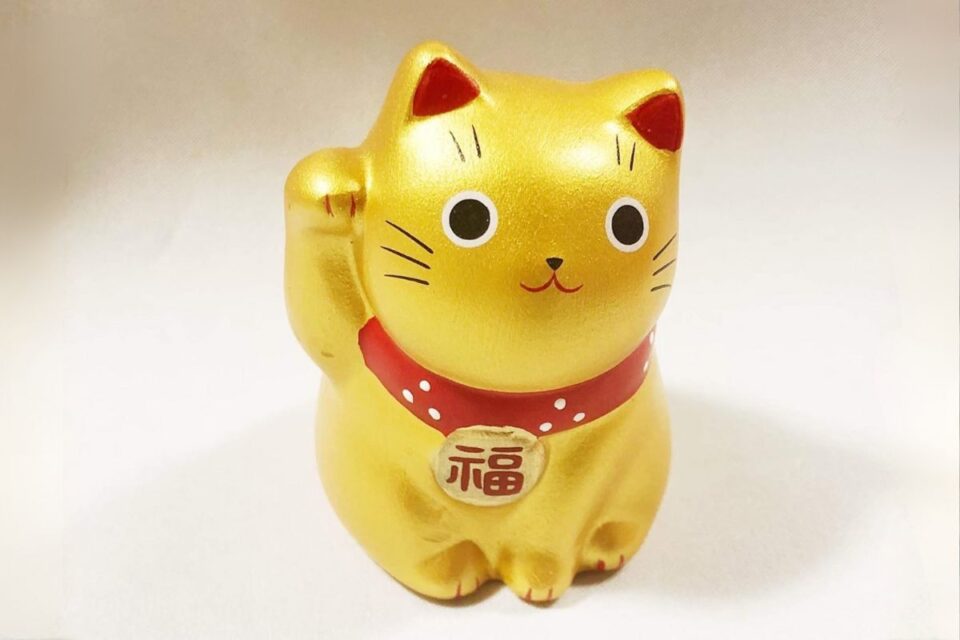
This adorable figure is called Maneki Neko (招き猫), literally “the beckoning cat” in Japanese.
Far from being just a cute decoration, it’s a symbol of good fortune, protection, and prosperity deeply rooted in Japanese culture.
The Origin of Maneki Neko
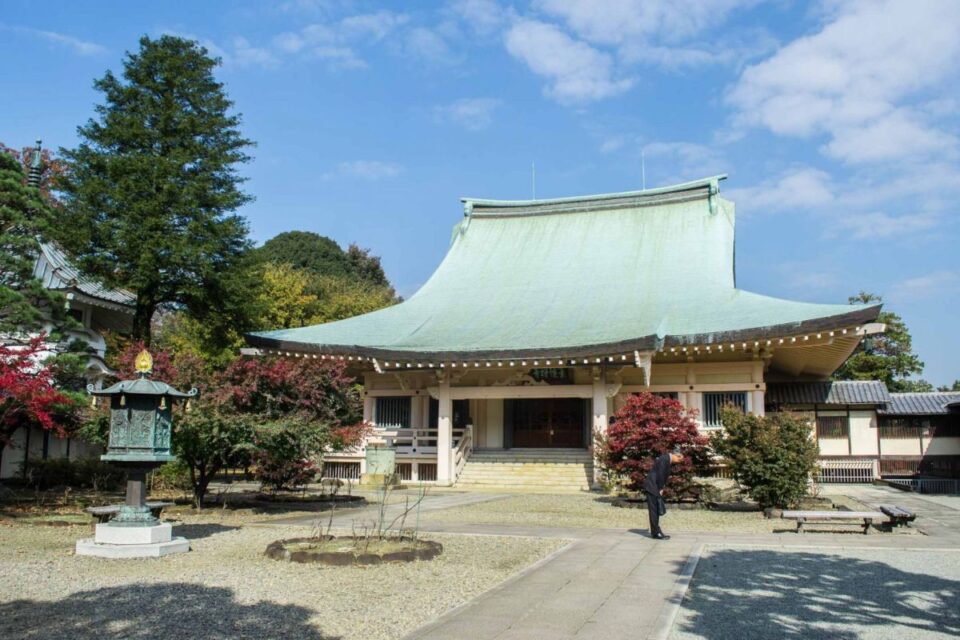
The story of Maneki Neko traces back to Japan between the 17th and 19th centuries, particularly to Gotoku-ji Temple in Tokyo.
According to legend, a poor temple priest cared for a stray cat. One day, a traveling samurai took shelter under a tree near the temple during a thunderstorm. He saw the cat beckoning him, and just as he moved, lightning struck where he had been standing. Grateful, the samurai became the temple’s patron, bringing prosperity to the shrine.
From this story, the Maneki Neko became a timeless symbol of luck and protection, spreading across Asia and beyond.
Symbolism and Meaning of the Lucky Cat
Each gesture and accessory of the Lucky Cat has a unique meaning:
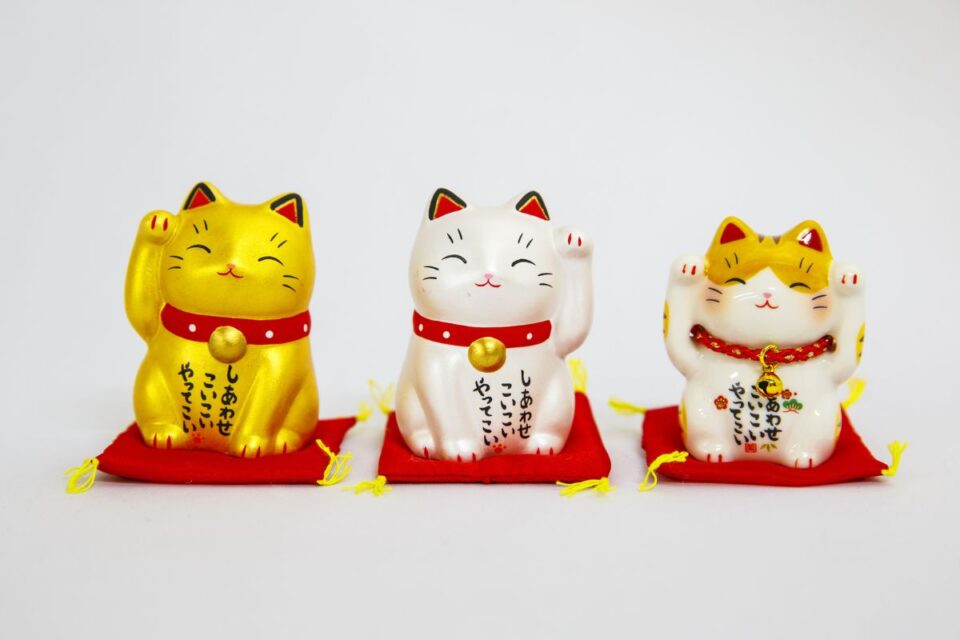
- 🐾 Raised Left Paw – Attracts customers or visitors.
- 🐾 Raised Right Paw – Brings wealth and financial luck.
- 🐾 Both Paws Raised – Offers protection and balances fortune and prosperity.
- 🪙 Objects Held –
- Koban coin: wealth & abundance
- Carp (koi fish): perseverance & strength
- Fan or jewel: wisdom & success
The Colors of Maneki Neko and Their Meanings
Different colors of the Maneki Neko represent different blessings. Here’s a quick guide:
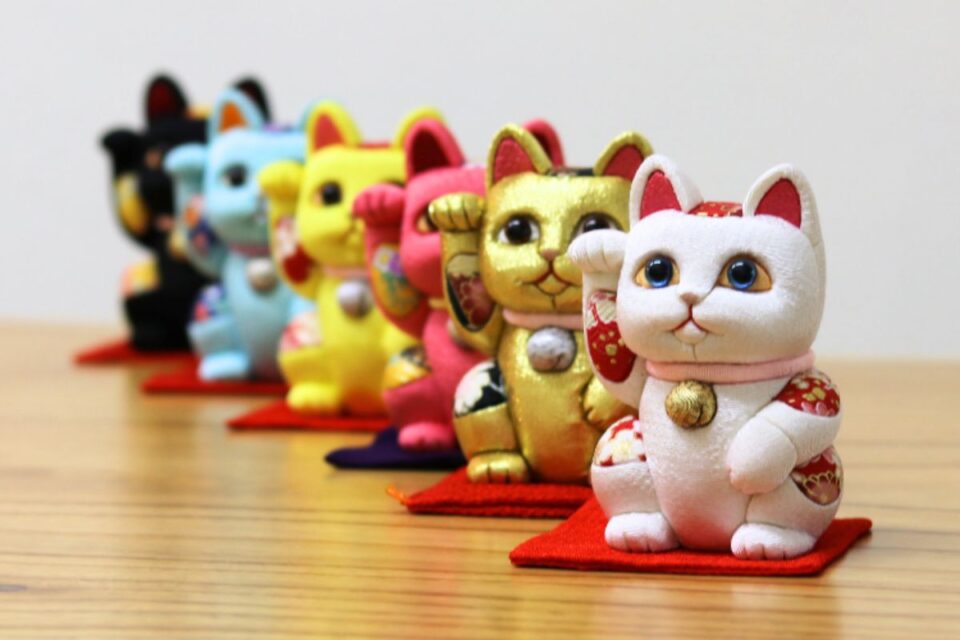
| Color | Meaning |
|---|---|
| White | Purity & Happiness |
| Gold | Wealth & Prosperity |
| Black | Protection from Evil |
| Red | Good Health & Love |
| Pink | Romance & Friendship |
| Green | Education & Safety |
Feng Shui and Lucky Cat Placement Guide
Placement is essential in attracting the right kind of energy through Feng Shui:
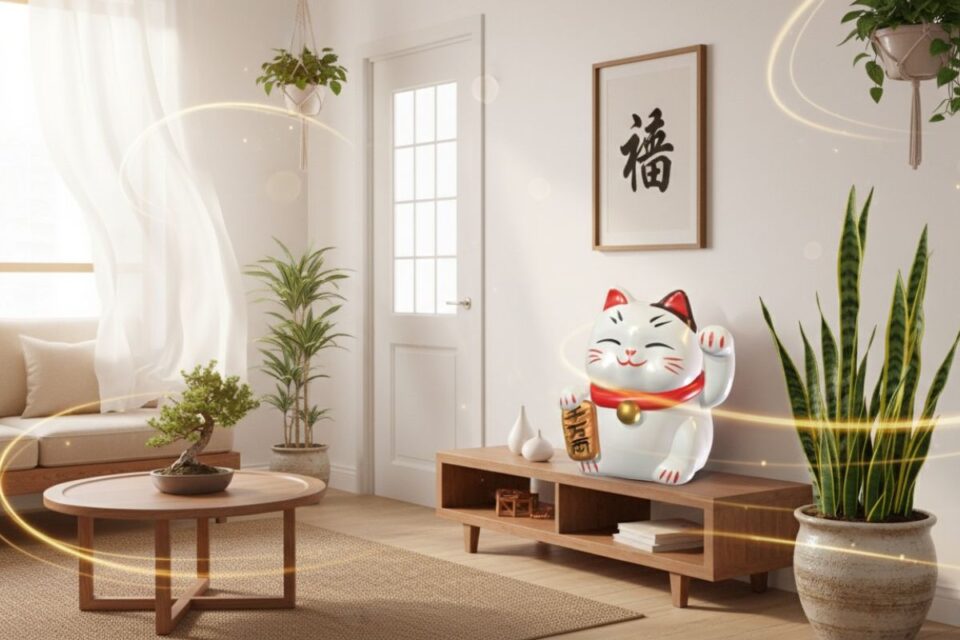
- 🏬 Shop or Business Entrance: attracts customers and good fortune.
- 💼 Office or Work Desk: brings success and career growth.
- 🏠 Home Living Room: enhances positive vibes and family harmony.
Best Direction: Place it facing the entrance or in the southeast corner (the wealth corner in Feng Shui).
Cultural Variations: Japan, China, and Beyond
While Maneki Neko originated in Japan, its Chinese counterpart—Zhaocai Mao (招财猫)—shares similar meanings of attracting wealth.
Today, the lucky cat has become a global icon of prosperity, often seen in restaurants, offices, and even modern art and digital culture across Asia, America, and Europe.
The Lucky Cat in Modern Life and Pop Culture
From anime to high-end design, the Lucky Cat remains a pop culture favorite.
You can spot its influence in global icons like Hello Kitty and mobile games such as Neko Atsume, symbolizing good luck and charm in modern life.
In today’s world, the waving cat represents not just wealth but also hope, positivity, and cultural continuity.
Why the Lucky Cat Still Charms the World
The Maneki Neko endures as more than just a lucky charm—it’s a symbol of prosperity, protection, and optimism.
Each color, gesture, and placement tells a story of faith in good fortune and positive energy.
✨ Find your perfect Maneki Neko and invite good fortune into your life today.