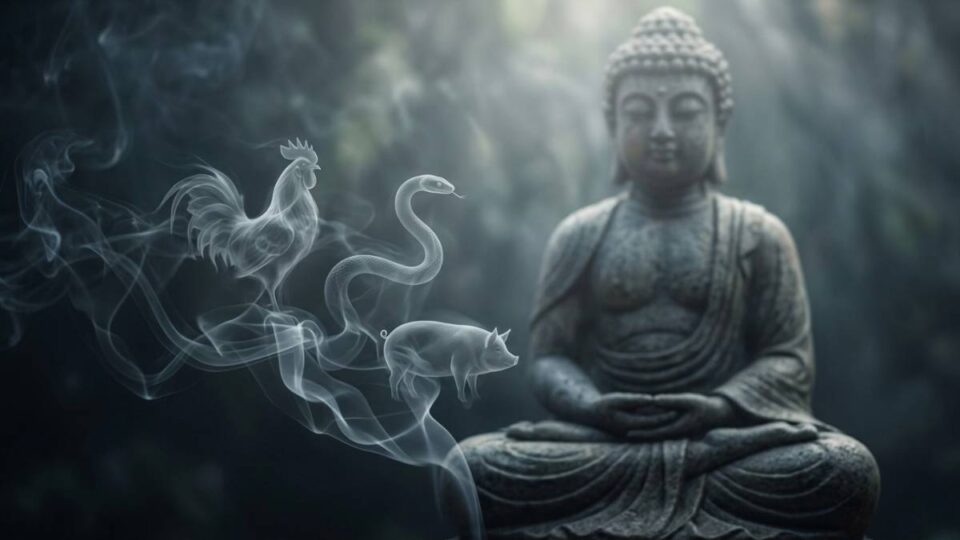
We’ve all been there: the sudden flash of anger when stuck in traffic, the nagging urge to buy something we don’t need, or that persistent feeling of being lost in a world that moves too fast. In Buddhist philosophy, these aren’t just random emotions—they are symptoms of something deeper.
For centuries, practitioners have identified three core “toxins” that cloud our judgment and prevent us from finding true peace. These are known as the Three Poisons (Trivisa). Understanding them isn’t about following a rigid dogma; it’s about gaining a practical mirror to see why our minds often feel so chaotic.
What Exactly are the Three Poisons?
At the heart of Buddhist teaching, the Three Poisons are the primary forces that keep the cycle of suffering spinning. Think of them as the “operating system” of a confused mind.
Greed (Lobha)
Greed isn’t just about wanting more money. It’s a state of “attachment” or “craving.” It is that voice in our head saying, “If I only had this, I would be happy.” Whether it’s a physical object, a status, or even a person, greed convinces us that our happiness is always somewhere else, just out of reach.
Hatred (Dosa)
If greed is the urge to pull things toward us, hatred is the force that pushes things away. It manifests as anger, resentment, or aversion. It’s the burning fire we feel when reality doesn’t match our expectations. When we are under the influence of Dosa, we view the world as an enemy to be conquered or avoided.
Delusion (Moha)
Delusion is perhaps the most subtle and dangerous. It’s the “fog” that prevents us from seeing things as they truly are. It’s a fundamental misunderstanding of the world—the belief that things are permanent when they are changing, or that our “ego” is the center of the universe. Without clearing this fog, we remain trapped in the other two poisons.
The Hidden Meaning Behind the Wheel of Life
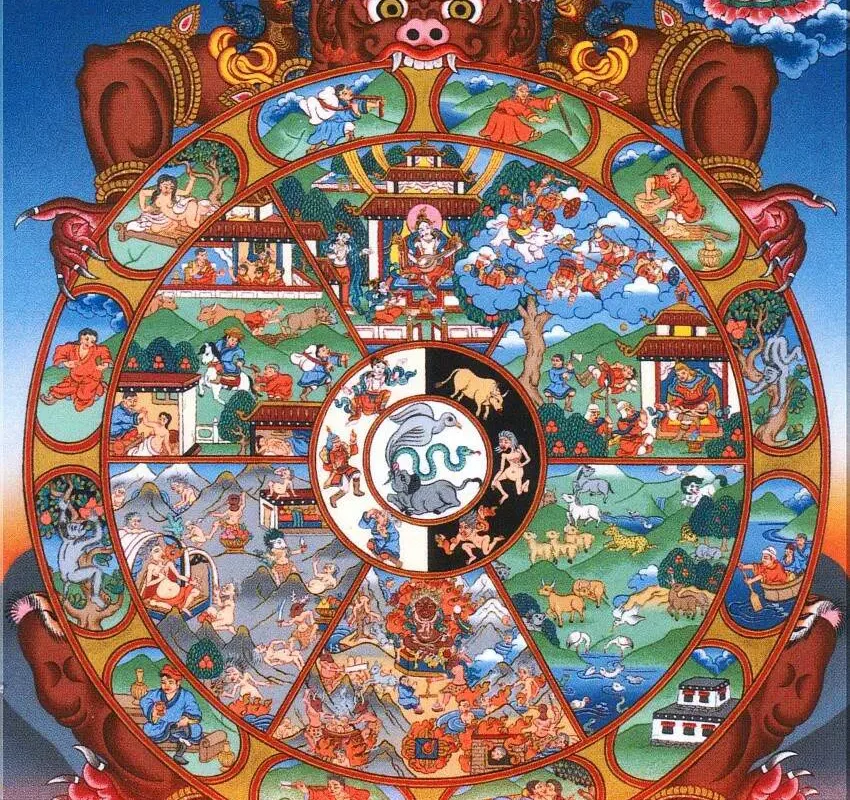
If you walk into a temple in one of the many top Buddhist nations in the world, you’ll likely see a vibrant circular painting known as the Bhavacakra, or the Wheel of Life.
At the very center of this wheel, you’ll find three animals chasing each other’s tails. This isn’t just folk art; it’s a psychological map.
- The Rooster (Greed): Constantly pecking for more, never satisfied.
- The Snake (Hatred): Ready to strike at the slightest provocation, symbolizing the venom of anger.
- The Pig (Delusion): Representing a lack of clarity, moving through life without awareness.
Notice how they are linked: the pig (delusion) bites the tail of the snake, which bites the rooster, creating an endless loop. This visual reminder shows us that our anger often comes from our greed, and both are rooted in our lack of understanding.
How Modern Life Feeds These Ancient Toxins

It’s easy to think of these concepts as ancient relics, but they are more relevant today than ever. Our modern world is practically designed to trigger them:
- Social Media: Often acts as a fuel for Greed, making us crave lives and bodies that aren’t ours.
- Echo Chambers: Feed our Hatred by creating an “us vs. them” mentality, making it easier to feel aversion toward anyone with a different opinion.
- Information Overload: Leads to Delusion, where we are so busy consuming “content” that we lose the wisdom to see the truth.
This realization is part of the deep wisdom that was first discovered by the Buddha under the Bodhi tree. He realized that to change the world, we must first change the way our minds respond to these triggers.
Transforming the Mind: The Path to Liberation

The good news? These “poisons” aren’t permanent parts of who you are. They are more like clouds passing through a clear sky. In Buddhism, every poison has an antidote:
- For Greed, practice Generosity (Dana): By giving—whether it’s time, money, or kindness—we break the grip of “I need.”
- For Hatred, practice Loving-kindness (Metta): We learn to meet anger with a soft heart, realizing that everyone is fighting their own battle.
- For Delusion, practice Wisdom (Prajna): Through mindfulness and meditation, we clear the fog and see the reality of change and connection.
Common Questions About the Three Poisons
Can we ever fully get rid of them?
In the Buddhist tradition, only an enlightened being is completely free from them. For the rest of us, the goal is “management.” It’s about noticing when the snake or rooster starts to stir and choosing a different response.
Is all desire considered “Greed”?
Not at all. There is a difference between a healthy aspiration (like wanting to be healthy or help others) and “craving.” Craving is a desperate, sticky kind of wanting that causes pain when we don’t get what we want.
Why is Delusion called the root poison?
Because if we truly understood how interconnected and temporary everything is, we wouldn’t feel the need to be greedy or hateful. Awareness is the light that makes the shadows of the other two poisons disappear.
Final Thoughts
The Three Poisons aren’t meant to make us feel guilty. They are tools for diagnosis. Once you recognize the rooster, the snake, and the pig within your own mind, you stop being their victim. You start to see that peace isn’t something you find “out there”—it’s something you cultivate by clearing the toxins from within.